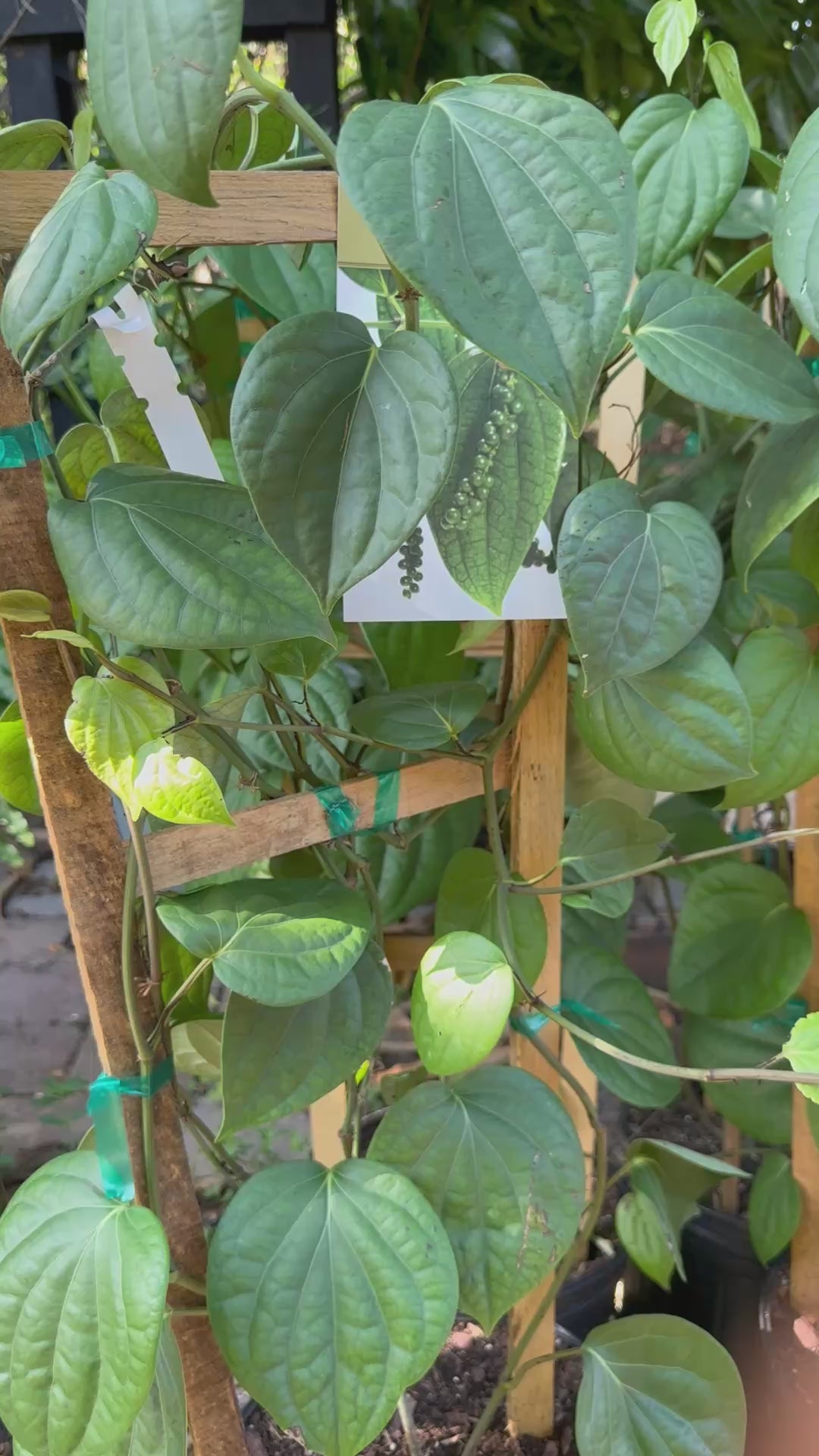
Black Pepper Plant — Grow Your Own Peppercorns
Bring one of your kitchen’s most familiar flavors into your garden with the Black Pepper Plant (Piper nigrum). Imagine seasoning your favorite meals with peppercorns harvested from a vine you have grown yourself—from a simple sprinkle over vegetables to the finishing touch on a comforting Caribbean dish.
This tropical climbing plant produces hanging spikes of peppercorns and adds another edible layer to your spice garden or food forest. Logee's Plants
One Plant, Different Peppercorns
Black, white, and green peppercorns come from the same species, with different harvest stages and processing methods:
-
Black pepper: Unripe berries are harvested and dried until dark and wrinkled.
-
Green pepper: Immature berries are used fresh or preserved.
-
White pepper: Ripe berries are processed to remove the outer fruit layer, leaving the seed.
This is the vine that produces culinary peppercorns, rather than a chili or bell pepper plant. Piper nigrum
Growth Habit & Garden Placement
Black pepper is a perennial climbing vine that needs a sturdy trellis, post, or other suitable support. Prune and train it to keep growth accessible for harvesting.
In a food forest, consider a warm location with filtered light. Container growing also allows you to move the plant into shelter during cold weather. GardeningSG
Growing Black Pepper in Palm Bay
Black pepper thrives in tropical warmth and humidity and needs protection from cold. For Palm Bay gardeners, a container with climbing support is a practical option when reliable winter shelter is available. An in-ground planting needs a carefully chosen, protected microclimate. Logee's Plants
Black Pepper Plant Care
-
Light: Provide bright, filtered light or dappled shade. Protect from harsh afternoon sun.
-
Soil: Use fertile, well-drained soil rich in organic matter.
-
Watering: Maintain even moisture without leaving the roots waterlogged.
-
Support: Provide a sturdy structure for climbing.
-
Fertilizing: Feed during active growth according to fertilizer-label instructions.
-
Pruning: Remove dead growth and thin crowded vines to improve light and airflow.
-
Cold protection: Shelter the plant before frost or freezing weather. GardeningSG
Harvesting & Your Food Forest
Black pepper takes patience. Plants grown from seed may take approximately 3–4 years to begin flowering, and fruit development takes additional time. The age and propagation method of your plant influence when your first harvest arrives. GardeningSG
Harvest Planner recommendation: Use “Variable—depends on flowering and growing conditions” until your Palm Bay observations establish a local harvest pattern. Continuous production reported in tropical climates should not be treated as a guaranteed year-round Florida harvest.
Plan Your Harvest Before You Plant.™
Include spice plants alongside your fruit trees and vegetables to grow more of the ingredients your family enjoys.
Quick Growing Information
| Feature |
Details |
| Botanical name |
Piper nigrum |
| Plant type |
Tropical perennial climbing vine |
| Harvest |
Peppercorns |
| Light |
Bright filtered light or dappled shade |
| Soil |
Fertile, moist, well-drained |
| Support |
Trellis, post, or suitable climbing structure |
| Container growing |
Suitable with support and regular care |
| Cold protection |
Required during frost and freezes |
| Best uses |
Spice gardens, protected food forests, container gardens |
Growing details follow botanical and grower guidance; local results vary. Piper nigrum
Local pickup in Palm Bay, Florida.
Grow what you eat. Eat what you grow.™